Why Do Some Flooring Installers Charge More Than Others? A Transparent Breakdown
Three quotes for the same floor can vary by thousands. Here's exactly what drives the gap — scope, prep, insurance, warranty — and how to spot the red flags in a suspiciously cheap bid.
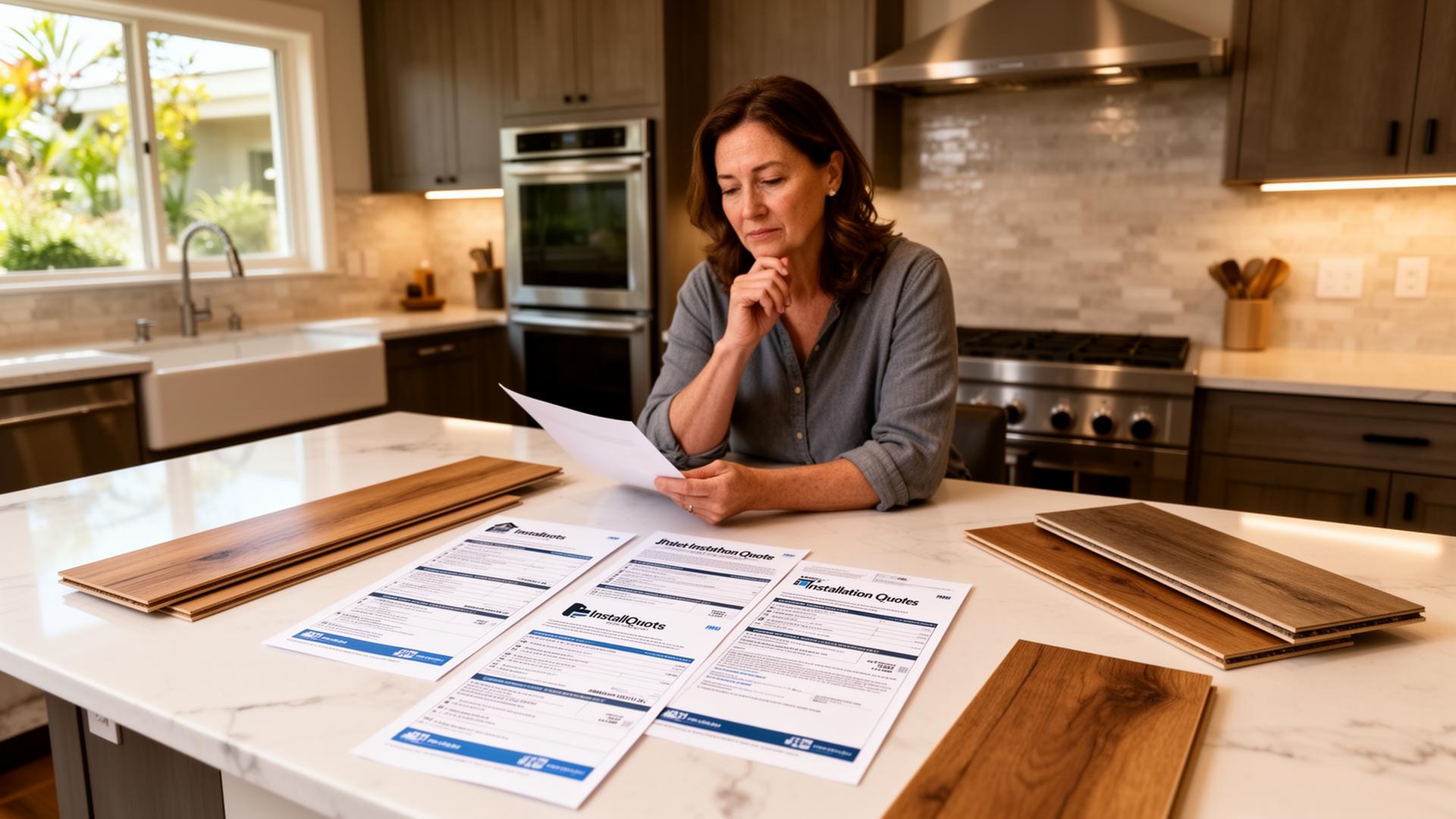
Three flooring installers walk the same 800-square-foot living room and hand you quotes of $2,800, $3,900, and $5,500. Same floor, same house, same week — and a $2,700 spread. You are not being scammed. You are being quoted three different jobs that just happen to share the same address.
Here is exactly what drives the gap between flooring installation quotes, which differences are worth paying for, and which "savings" will cost you the floor itself in two years.
The 8 real reasons flooring quotes differ
1. Scope of work (the #1 reason)
This is the single biggest cause of price gaps. One quote includes tearing out your old carpet, hauling it away, prepping the subfloor, installing new planks, removing and reinstalling baseboards, and trimming three doorways. Another quote says "install only" — and assumes you'll handle everything else.
Before you compare numbers, compare line items. If a quote does not break out removal, disposal, subfloor prep, underlayment, transitions, and baseboards, you are not comparing apples to apples. Our guide to getting multiple flooring quotes walks through the line items that should appear on every bid.
2. Subfloor condition and prep
Subfloor prep is the most expensive thing most homeowners never see. Self-leveler, plywood replacement, moisture mitigation, and patchwork can quietly add $1–$3 per square foot on top of the install rate.
Some contractors quote assuming your subfloor is flat and dry. Others actually check with a 10-foot straightedge and a moisture meter, then price the prep honestly. The honest quote looks more expensive on day one — and the cheaper quote turns into a change order on day three. See exactly what proper subfloor prep includes.
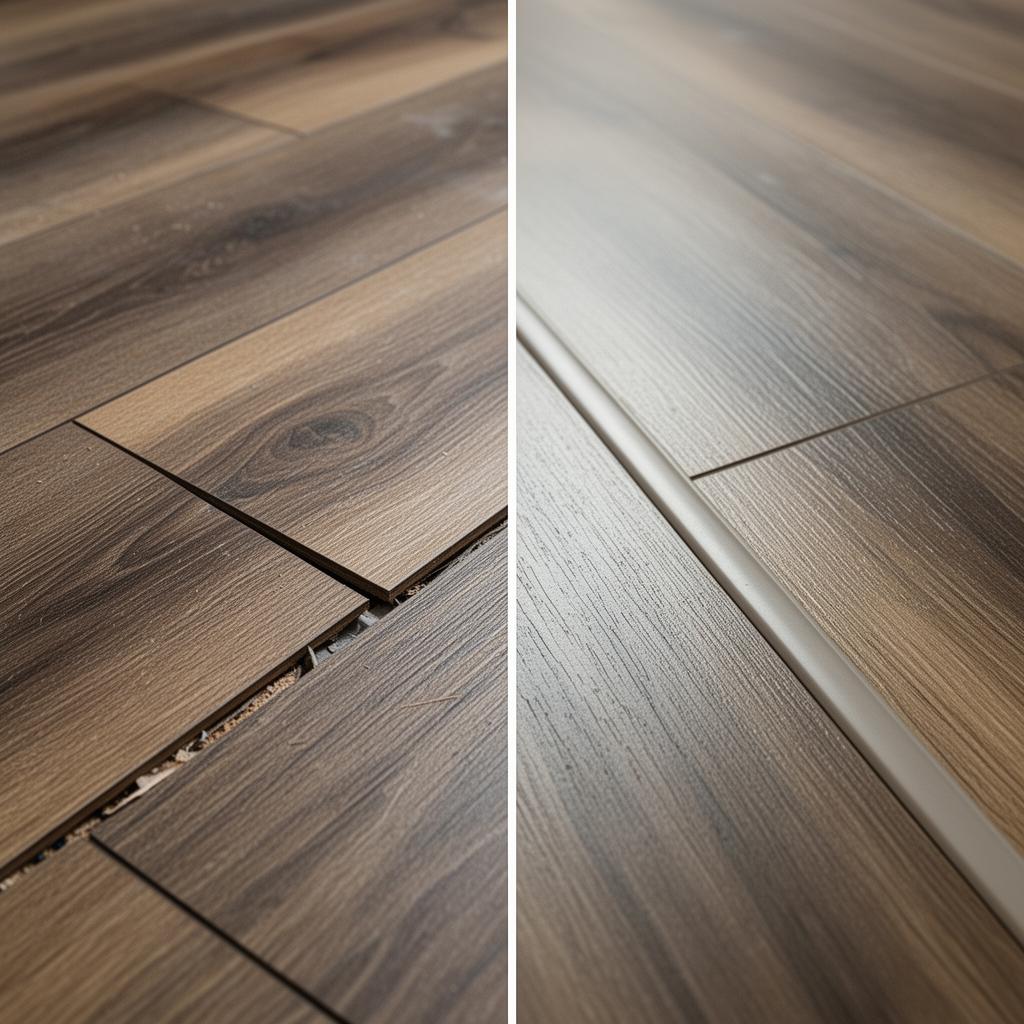
3. Material quality and method
"LVP installation" is not one job. Glue-down, floating click-lock, and loose-lay each take different labor. Premium underlayment, moisture barriers, brand-name reducers, and stair nosings cost more than generic versions. A quote using a 6 mil moisture barrier under the underlayment is not the same job as a quote that skips it.
4. Installer experience and crew skill
A journeyman with 10 years of installs lays a clean room in half the time a first-year installer needs, with fewer wasted planks and fewer callbacks. That experience shows up in the hourly rate. A bargain bid often means you are paying someone to learn on your floor.
5. License, bond, and insurance
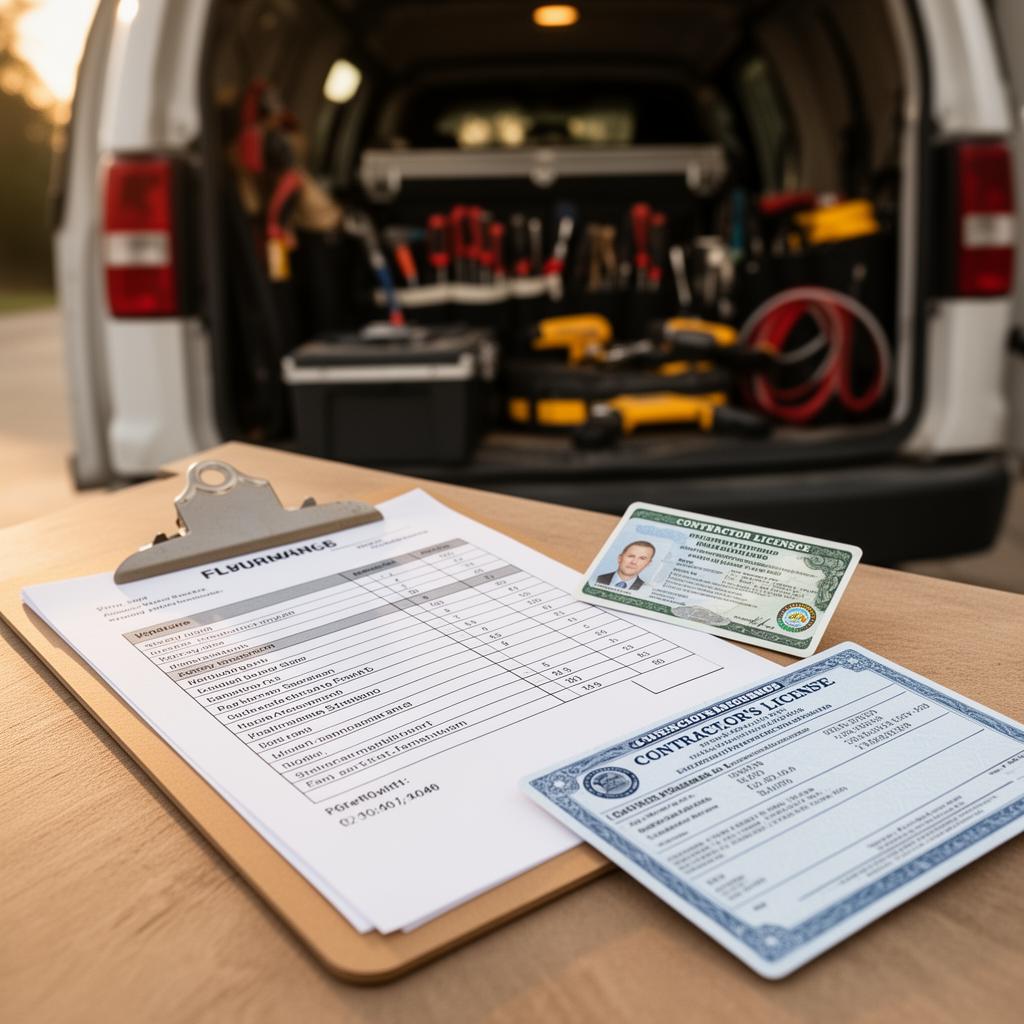
In California, contractors doing more than $1,000 of labor and materials must hold an active CSLB license and carry general liability and workers' compensation insurance. That overhead is real — and it is the reason you can sue, lien, or recover damages if something goes wrong.
Unlicensed handymen skip all of it and pass the "savings" to you. Then a worker gets hurt in your house, or a plank fails, and there is nobody to call. Here's how to verify a contractor's license and insurance in five minutes.
6. Warranty and callbacks
A reputable installer warranties their labor for 1–2 years and shows up if a plank lifts or a transition pops. That callback risk is priced into the bid. Cheap quotes often come with no written warranty, no callback policy, and a phone number that stops working after final payment.
7. Geography, travel, and access
Southern California labor rates vary by city. A crew based 45 minutes from your house factors fuel, traffic, and parking into their rate. Tight access (third-floor walk-up, narrow alley, no driveway) adds time. A neighborhood crew with easy access is naturally cheaper for the same skill level.
8. Business overhead
A two-person operation working out of a pickup truck has lower overhead than a company with a showroom, an office manager, scheduling software, dedicated trucks, and a year-round bench. You pay a little more for the second one — and you get a real phone number, a real schedule, and a backup crew when life happens.
Red flags in a low bid
Cheap is not the same as suspicious. These specific patterns are:
- No written, itemized quote. Verbal estimates and one-line totals are not contracts.
- Large cash deposit upfront (more than 10% or $1,000, whichever is less, is the California legal cap for home improvement contracts).
- No proof of license, bond, or insurance when you ask.
- Vague catch-all language like "prep as needed" or "additional charges may apply" without a price.
- Pressure to sign today or a "discount that expires tonight."
- An outlier bid 30–40% below the other two — the bid is missing something, and you will pay for it later.
When the higher quote is actually the better deal
The most expensive bid is not automatically overpriced. Often, it is simply the only one that included everything the job actually needs.
Use this table to test whether you are really comparing the same job:
| Line item | Quote A (low) | Quote B (mid) | Quote C (high) |
|---|---|---|---|
| Tear-out and disposal | Not included | Included | Included |
| Subfloor prep / self-leveler | "As needed" | Up to $200 | Up to $600 |
| Underlayment + moisture barrier | Basic foam | Premium | Premium + 6 mil |
| Baseboard remove + reinstall | Not included | Included | Included |
| Transitions / reducers | 1 included | 3 included | All included |
| License + insurance verified | No | Yes | Yes |
| Labor warranty | None | 1 year | 2 years |
Quote A looks $1,500 cheaper until you add the missing items and discover it is actually the most expensive bid — once you pay another contractor to finish the parts the first one skipped.
How TRU Installation handles this
Most flooring contractors hide their prices behind "call for a quote." We publish ours. Pick your installation type, enter your square footage and add-ons, and our calculator gives you an itemized estimate on the spot — same line items, same rates, every customer.
When we visit to measure, we use a straightedge and a moisture meter, then quote any prep work in writing before we start. No mid-project surprises, no "as needed" language. See exact rates for SPC and LVP, hardwood, and laminate installation, or run the full calculator on our pricing page.
The bottom line
Three quotes for the same floor will almost always vary by hundreds — sometimes thousands — of dollars. Most of that gap is scope, prep, insurance, and warranty. A little of it is overhead. None of it should be a mystery.
Before you choose the cheapest bid, line up the scopes side by side. If you cannot tell why one number is lower, ask. The contractor who answers clearly is the one worth hiring. For a deeper dive on what a fair labor rate looks like in 2026, read our LVP installation cost per square foot guide.
Ready for a quote with no missing line items? Get an instant itemized estimate or book a professional measurement — we'll show you every number before we touch a plank.
Know your flooring cost in 60 seconds.
Use our published rates to get an itemized estimate — no phone calls, no sales pressure.
Keep reading
All articles →
How Much Does It Cost to Install Laminate vs LVP?
A side-by-side cost breakdown of laminate vs LVP — material, labor, and total installed price per square foot, plus which one actually saves money over 10 years.
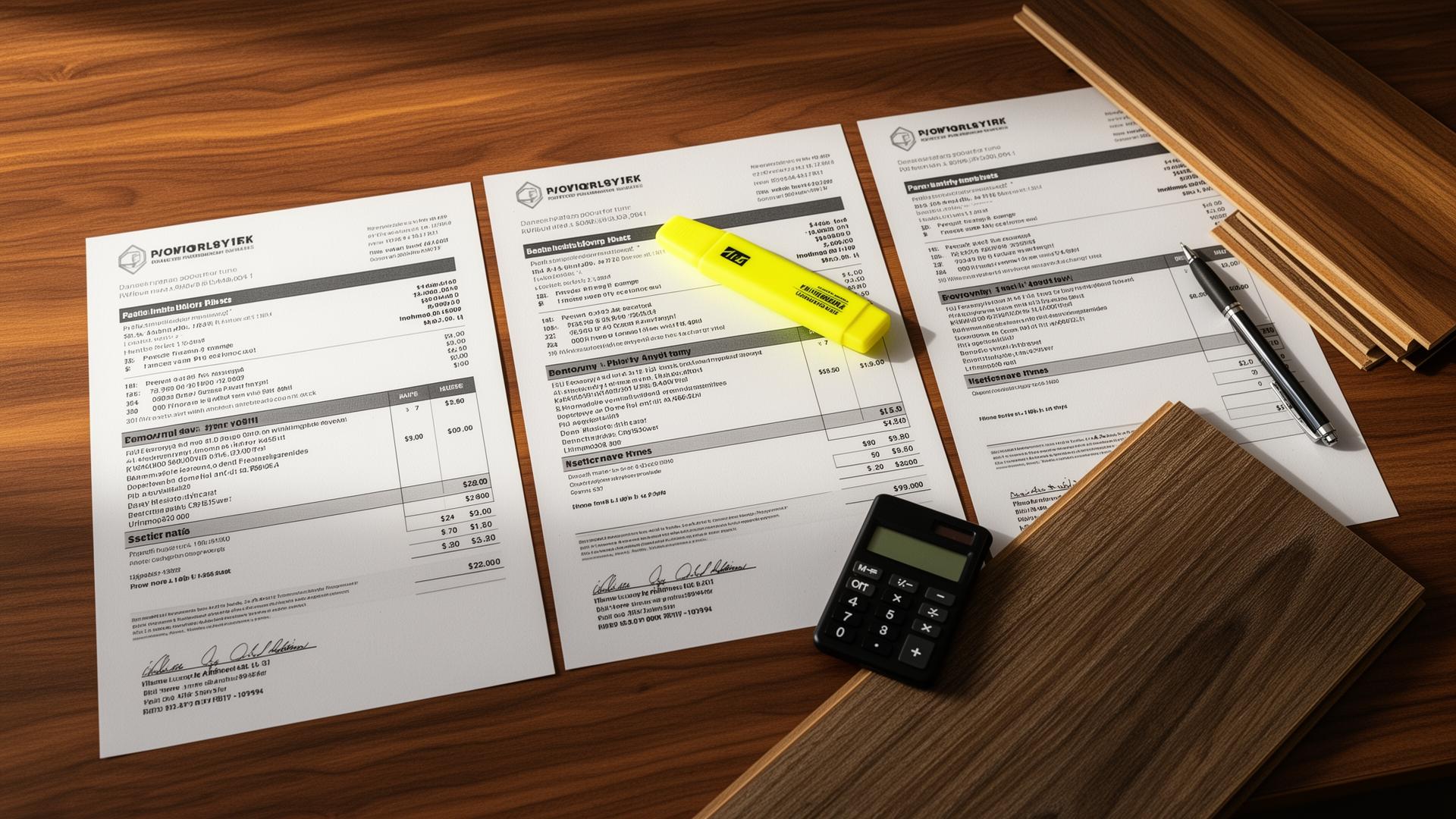
How to Compare Flooring Installation Quotes: A Side-by-Side Guide
A step-by-step framework for lining up two or three flooring installation quotes side by side, normalizing line items, and picking the best value — not just the lowest price.
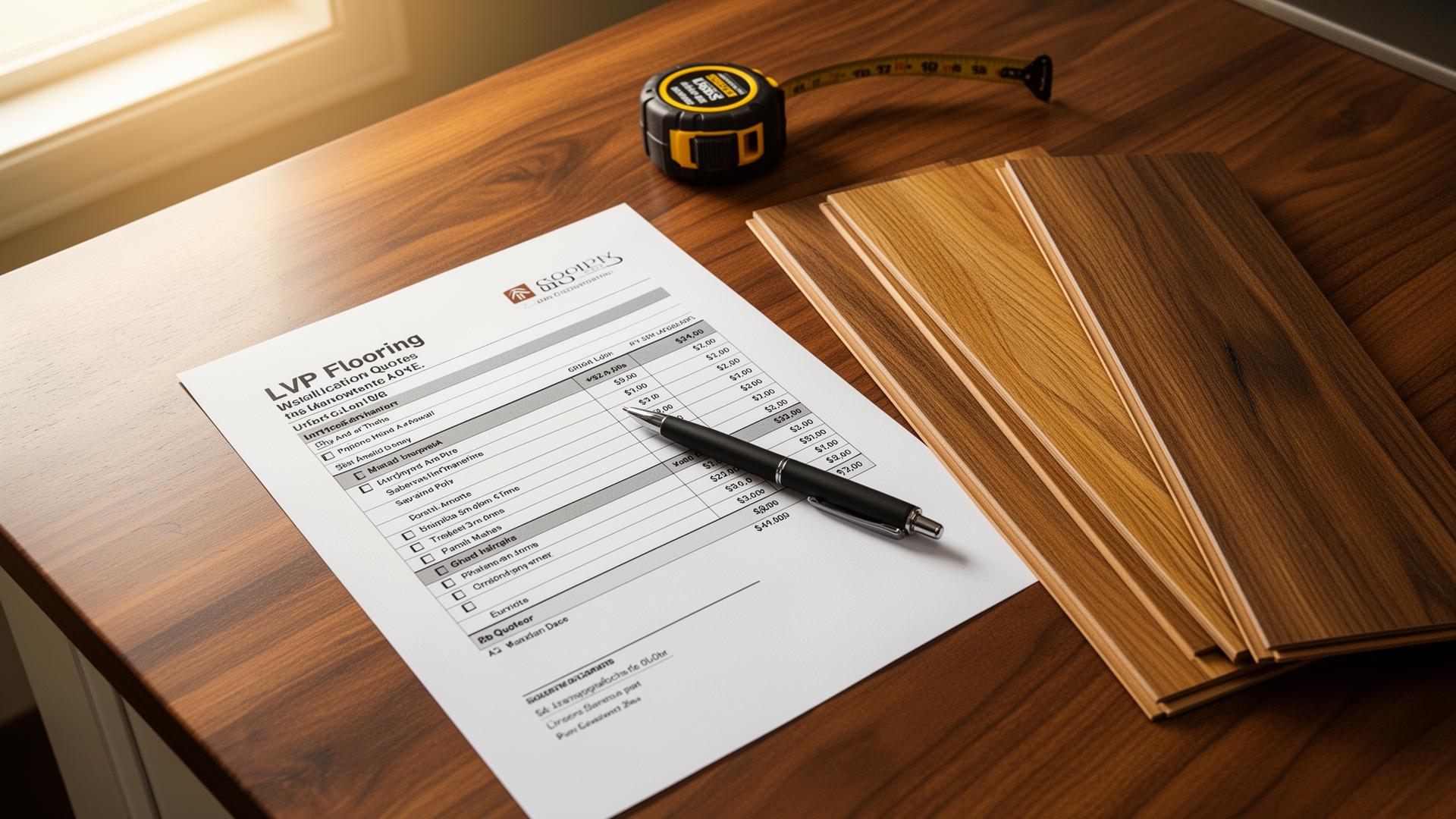
What's Included in an LVP Flooring Installation Quote?
A line-by-line breakdown of a real LVP installation quote — what each charge means, what should be itemized, and the omissions that signal change-order trouble ahead.