Laminate vs LVP Flooring: What's the Real Difference? (2026 Guide)
Laminate and LVP look almost identical on the showroom floor — but they perform very differently. Compare core construction, water resistance, durability, cost, and which one wins in each room of your home.
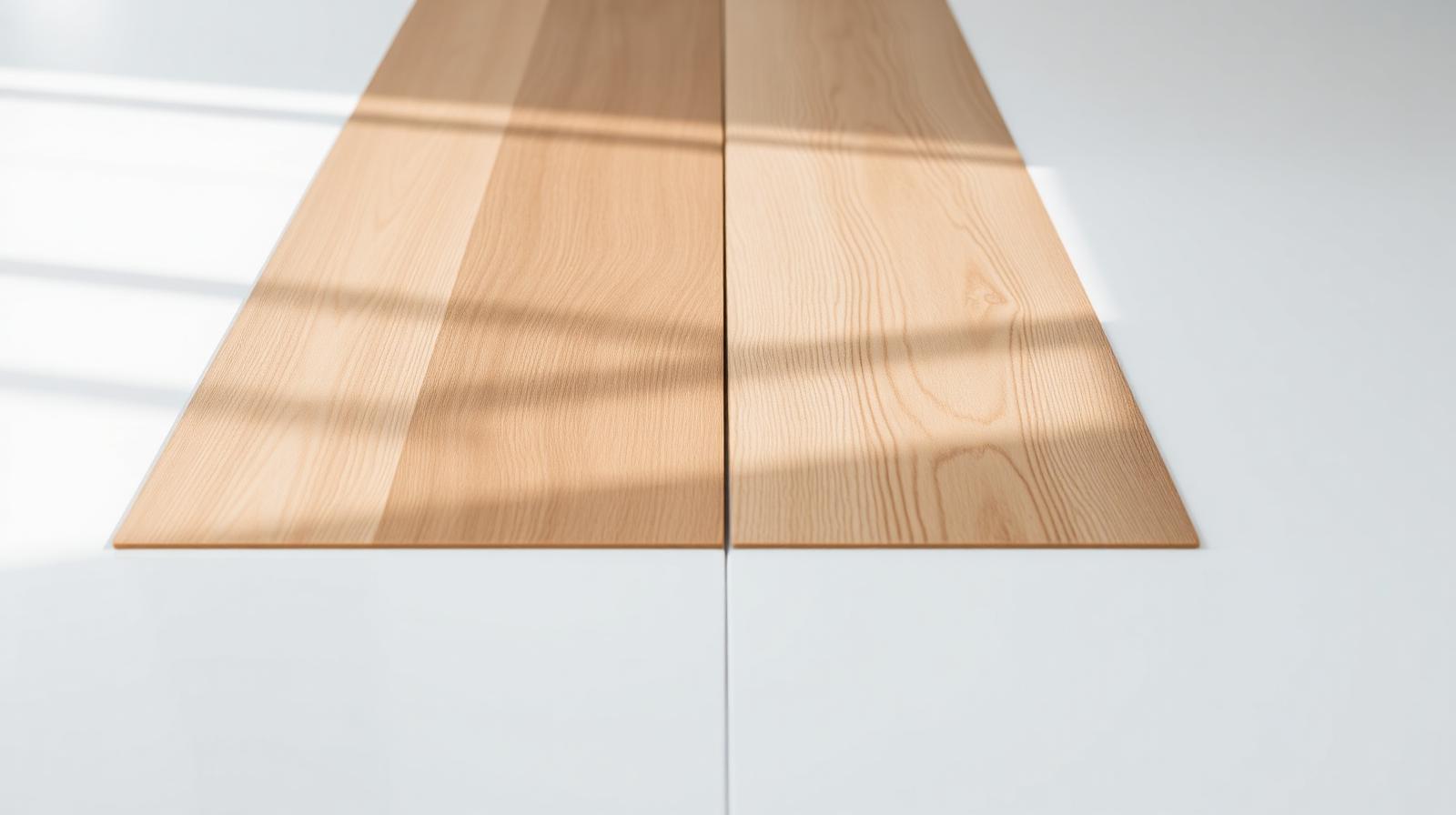
Short answer: Laminate flooring has a wood-fiber HDF core that absorbs water; LVP (luxury vinyl plank) has a 100% waterproof PVC or SPC core. LVP wins decisively in kitchens, bathrooms, and basements. Laminate wins on dent resistance and that warm, solid underfoot feel in bedrooms, living rooms, and dry hallways.
Both materials look like real wood. Both click together. Both cost roughly the same to install. But the differences underneath determine which one will still look great in your home ten years from now — and which will swell, warp, or dent under your specific lifestyle.
Quick-glance comparison
| Feature | Laminate | LVP (Luxury Vinyl Plank) |
|---|---|---|
| Core material | HDF (compressed wood fiber) | PVC or SPC (stone-plastic composite) |
| Water resistance | Water-resistant at surface only | 100% waterproof |
| Scratch resistance | Excellent (AC4–AC5 rated) | Good (depends on mil thickness) |
| Dent resistance | Excellent | Moderate (softer surface) |
| Underfoot feel | Warm, solid | Slightly softer, can feel hollow |
| Typical thickness | 8–12 mm | 4–8 mm (SPC) / 5–8 mm (WPC) |
| Material cost | $1–$4 / sq ft | $2–$7 / sq ft |
| Lifespan (residential) | 15–25 years | 15–25 years (longer in wet rooms) |
| Best rooms | Bedrooms, living rooms, hallways, stairs | Kitchens, bathrooms, basements, mudrooms |
What is laminate flooring?
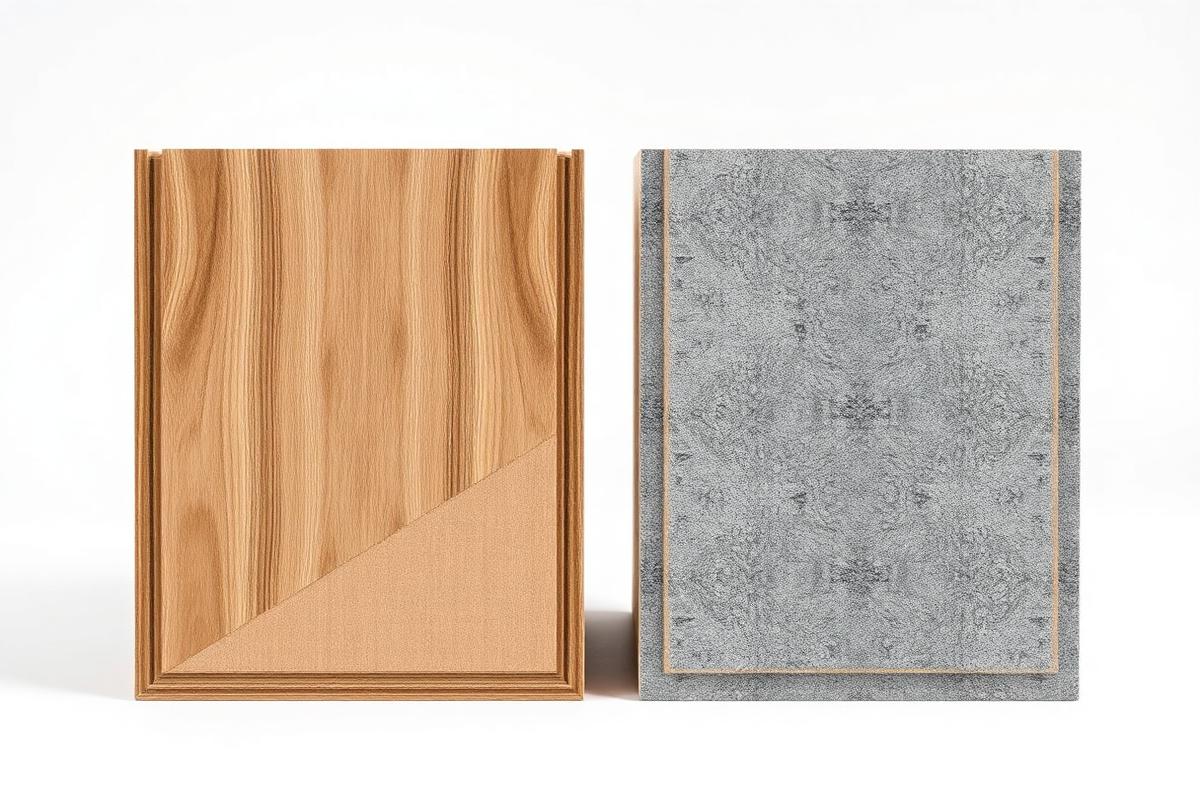
Laminate is a four-layer engineered product:
- Wear layer — clear melamine resin (rated AC3–AC5 for abrasion)
- Décor layer — high-resolution printed image of wood, stone, or tile
- Core — high-density fiberboard (HDF), essentially compressed wood fiber
- Backing — moisture barrier, sometimes with attached underlayment
Strengths: Outstanding scratch and dent resistance, warm and solid underfoot, deeper EIR (embossed-in-register) textures that mimic real wood grain, lower material cost.
Weakness: The HDF core swells permanently when water sits at the seams. "Water-resistant" laminate buys you 24–72 hours to clean a spill — it does not survive standing water from a dishwasher leak or a bathtub overflow.
What is LVP flooring?
LVP is built on a synthetic core that does not absorb water:
- Wear layer — clear urethane, measured in mils (6 mil minimum, 12–22 mil for high-traffic homes)
- Décor layer — high-resolution printed wood-look film
- Core — flexible PVC, rigid SPC (stone-plastic composite), or WPC (wood-plastic composite)
- Backing — often pre-attached cork or foam underlayment
Strengths: 100% waterproof, dimensionally stable in temperature swings, more forgiving over slightly uneven subfloors, easier DIY installation.
Weakness: Softer surface is more prone to denting under heavy furniture (refrigerators, pianos, sectional sofa feet). Without quality underlayment, it can sound hollow underfoot.
Head-to-head: the 7 categories that matter
1. Water resistance — LVP wins
Not close. LVP is waterproof through and through. Laminate is water-resistant at the surface, but a leak at the seams will swell the HDF core and there is no fixing it — only replacing.
2. Scratch and dent resistance — split decision
Laminate wins on scratches. An AC4-rated laminate shrugs off dog nails and dragged chairs better than most LVP at typical residential mil thickness. LVP wins on impact dents from dropped objects (a flexible surface absorbs the hit), but loses to laminate when a heavy refrigerator sits on it for years.
3. Underfoot feel and sound — laminate wins
Laminate feels warmer and more solid because the HDF core is dense and rigid. LVP can feel cooler and sound slightly hollow without a quality underlayment. SPC (rigid core) feels closer to laminate than flexible LVP does.
4. Look and realism — tie in 2026
Both have caught up to real wood. Laminate has historically had deeper texture (EIR matches the printed grain), but premium LVP now offers true-to-touch embossing and longer planks with better visual variation.
5. Installation difficulty — LVP slightly easier
Both use click-lock floating installation. LVP is more forgiving on slightly uneven subfloors because the planks flex. Laminate requires a flatter substrate (within 3/16" over 10 feet) or the locking joints fail. For a full DIY breakdown, read our honest DIY guide.
6. Cost — laminate cheaper on material, comparable on labor
Laminate material runs $1–$4 per square foot. LVP runs $2–$7. Labor for both is in the same range because the install process is nearly identical. See real numbers in our LVP cost guide.
7. Lifespan and warranty — tie in dry rooms, LVP in wet rooms
Both carry 15–25 year residential warranties. In a dry bedroom, both will outlast their warranties. In a kitchen, bathroom, or basement, LVP has a clear edge — and using laminate in a bathroom typically voids the warranty entirely.
Which is better for your room?
| Room | Better choice | Why |
|---|---|---|
| Kitchen | LVP | Spills, dishwasher leaks, fridge condensation |
| Bathroom | LVP (only) | Laminate voids warranty in wet zones |
| Basement | LVP (SPC core) | Concrete moisture, humidity swings |
| Mudroom / entry | LVP | Wet shoes, snow, rain tracked in |
| Bedroom | Laminate | Warmer, quieter, no water exposure |
| Living room | Either | Pets/kids → LVP. Traffic-only → laminate |
| Stairs | Laminate or rigid SPC LVP | Need dent resistance + stair-nose trim |
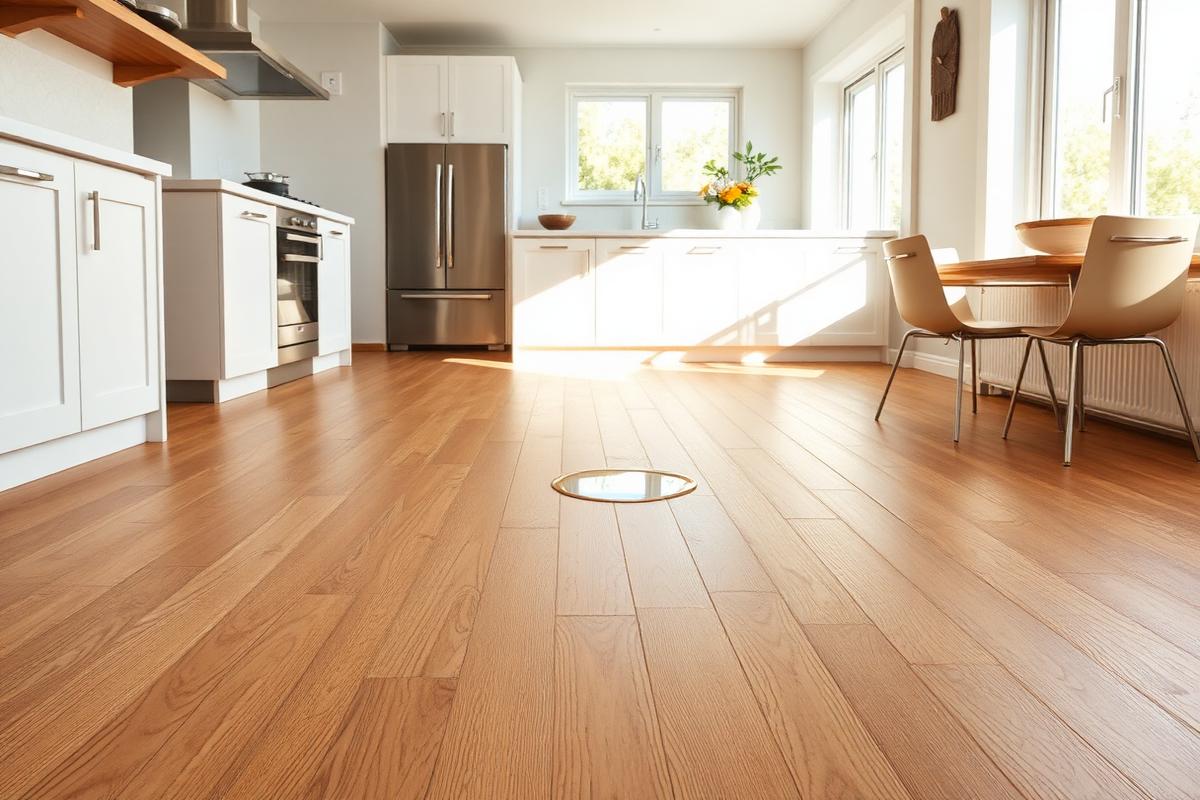
Cost comparison: 1,000 sq ft installed (Southern California)
| Line item | Laminate | LVP (SPC) |
|---|---|---|
| Material (mid-range) | $2,500 | $4,000 |
| Removal of existing flooring | $1,200 | $1,200 |
| Subfloor prep (level + patch) | $800 | $500 |
| Installation labor | $3,000 | $3,000 |
| Baseboards (remove + reinstall) | $900 | $900 |
| Total installed | $8,400 | $9,600 |
See live, itemized numbers for your exact square footage in our instant estimate calculator — TRU Installation publishes labor rates for both laminate and SPC / LVP.
Three common myths, debunked
"Waterproof laminate is the same as LVP." No. Waterproof laminate has tighter sealed seams that resist surface spills, but the HDF core still fails if water reaches it through a deeper failure. LVP has no wood fiber to fail.
"LVP is plastic and toxic." Modern LVP from reputable brands is phthalate-free and FloorScore certified for indoor air quality. Cheap import LVP can be a concern — buy from a known brand, not a no-name big-box bin.
"Laminate always looks fake." AC4-rated laminate with embossed-in-register texture is nearly indistinguishable from real engineered wood from standing height. The cheap laminate from 2005 is what gave the category a bad name.
So which should you choose?
The honest answer: most homes need both. LVP in the wet rooms and high-traffic ground floor, laminate in the bedrooms and upstairs. A good installer will tell you that — and walk through your specific layout before recommending one material wall to wall.
Before you call three contractors (and you should — see why three quotes is the right number), use our instant estimate calculator to benchmark the numbers. Or book a professional measurement visit and we will walk your home, recommend the right material for each room, and send a fully itemized quote within 48 hours.
Know your flooring cost in 60 seconds.
Use our published rates to get an itemized estimate — no phone calls, no sales pressure.
Keep reading
All articles →
Is LVP Better Than Laminate for Kitchens and Bathrooms?
Short answer: yes. In any room that gets wet, LVP wins on durability and warranty. Here's the moisture science, where laminate still makes sense, and how to choose for SoCal homes.
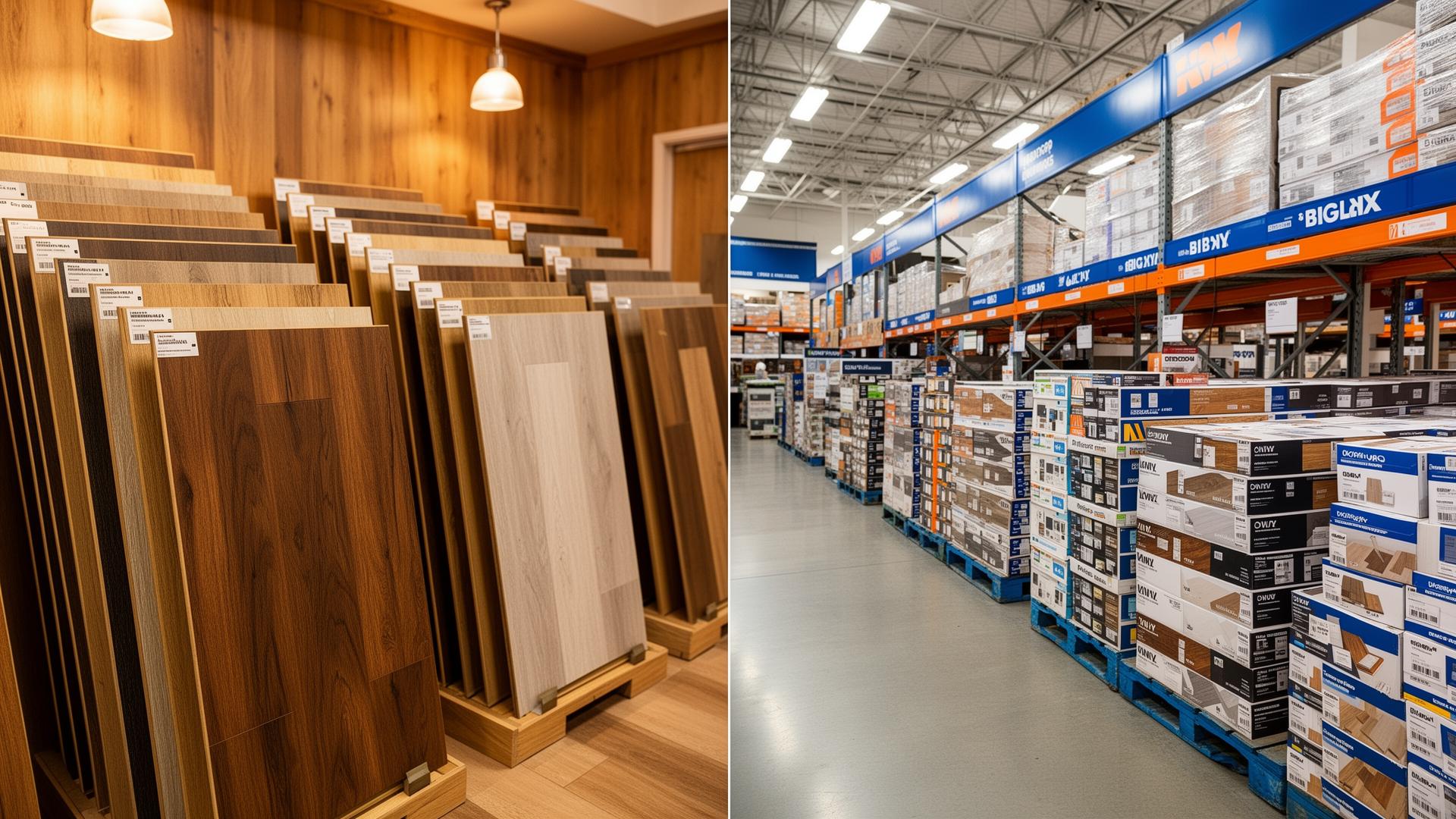
Local Flooring Store vs Big Box Retailer: Where Should I Buy LVP? (2026 Buyer's Guide)
Should you buy luxury vinyl plank at Home Depot, Floor & Decor, or a local flooring store? A Southern California installer breaks down the real price, quality, dye-lot, and warranty trade-offs.