Is LVP Better Than Laminate for Kitchens and Bathrooms?
Short answer: yes. In any room that gets wet, LVP wins on durability and warranty. Here's the moisture science, where laminate still makes sense, and how to choose for SoCal homes.
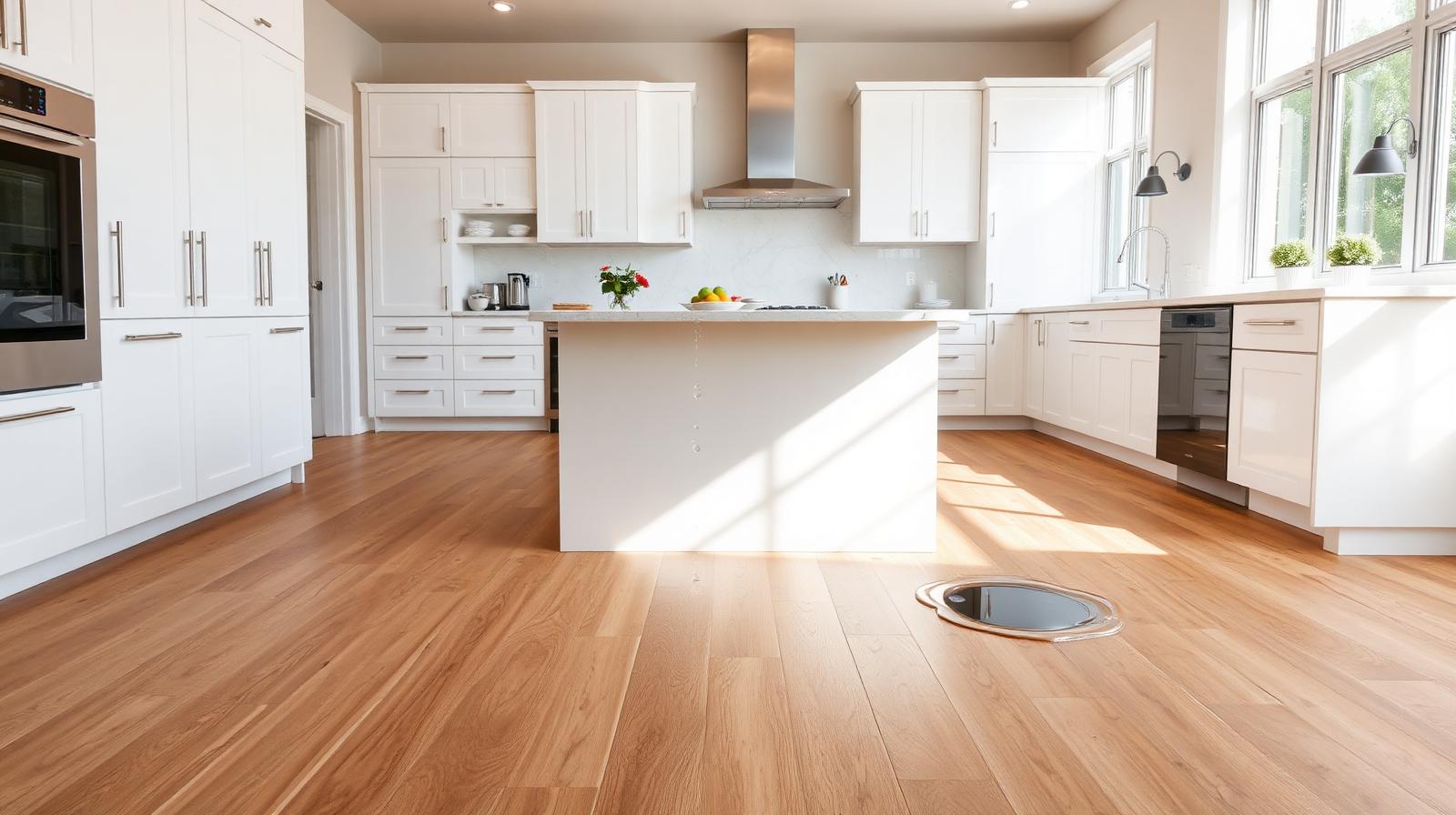
The short answer
Yes — for kitchens and bathrooms, luxury vinyl plank (LVP) is the better choice. The reason is the core material. Laminate uses a high-density fiberboard (HDF) core, which is essentially compressed wood. Wood and water don''t get along. LVP uses a solid PVC or SPC (stone-polymer composite) core, which doesn''t absorb water at all. A laminate plank that gets soaked at the seam will swell permanently. An LVP plank in the same puddle will be fine the next morning.
Below we break down exactly why, the room-by-room verdict, and the spots where laminate is still a smart pick.
Why the core material decides everything
"Waterproof laminate" exists, but the term is doing a lot of work. The wear layer on top of laminate is waterproof. The HDF core underneath is not. As long as water sits on the surface and gets wiped up within a few hours, modern laminate handles it. The moment water reaches the locking edges and wicks into the fiberboard — from a dishwasher leak you didn''t notice overnight, or condensation under a vapor-permeable rug — the core swells. Once HDF swells, it doesn''t shrink back. The plank stays raised and the seams stay open.
LVP, especially rigid-core SPC, has no organic material to swell. The same plank can sit in standing water for a week and pop the locking edges right back together. That single difference is why every flooring manufacturer rates LVP for "wet areas" and most rate laminate for "water-resistant" use only.
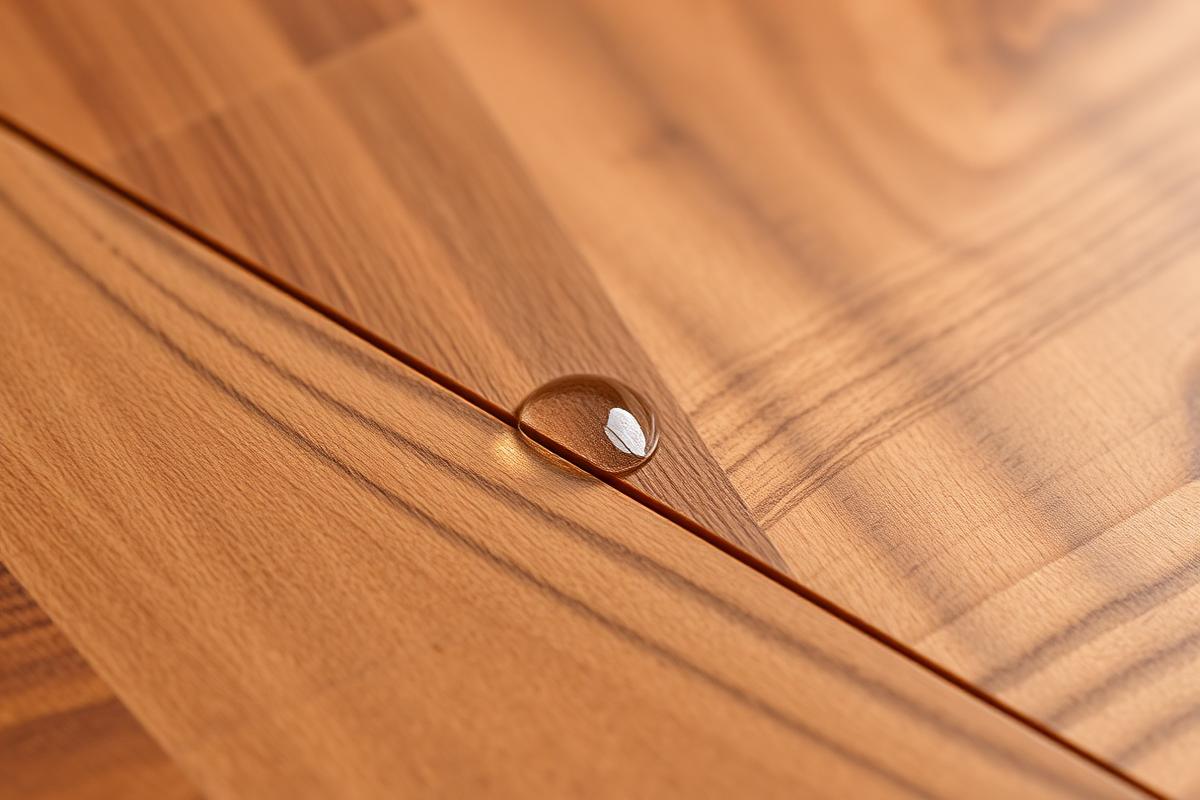
Kitchens: the case for LVP
Kitchens are wetter than people think. Common sources of standing water:
- Dishwasher gasket leaks (often invisible until baseboards rot)
- Refrigerator ice-maker line leaks behind the fridge
- Sink splash zone and pet water bowls
- Steam from cooking, especially with gas ranges and large pots
- Spilled drinks and dropped frozen items that thaw on the floor
LVP handles all of it without drama. The wear layer also resists scratches from dropped pans and chair legs better than laminate''s melamine surface. Where laminate sometimes wins in a kitchen: very dry households on a tight budget who want a more textured, wood-like look and accept the leak risk. That''s a narrow case.
Bathrooms: LVP almost always
In a full bathroom — toilet, sink, tub or shower — most laminate manufacturers explicitly void the warranty if you install it. Splash from a shower curtain, condensation from hot showers, and any toilet overflow will end the floor''s life early. Half baths (toilet and sink only) are gentler, but we still recommend LVP because the cost difference is small and the consequences of a single overflow are large.
LVP can be installed right up to the tub apron and toilet base with a thin bead of silicone at the perimeter, creating a continuous water-resistant surface. The look is closer to wood than tile, with the warmth that real tile lacks — and a fraction of the install cost.
Where laminate still makes sense
Don''t write off laminate entirely — it''s the right choice for plenty of rooms:
- Living rooms, bedrooms, hallways, home offices, dry basements. No standing water risk.
- Realism on a budget. Premium laminate often looks and feels more like real hardwood than LVP at the same price point. The embossing follows the printed grain (EIR — embossed in register), and the HDF core gives a more "solid" sound underfoot.
- Pet households on a budget. Laminate''s harder wear layer can outperform mid-grade LVP on scratch resistance.
The Southern California angle
SoCal''s low humidity is kind to both floors, but most of the homes we work in are slab-on-grade with limited or no vapor barrier between the concrete and the finished floor. Even "dry" slabs release some moisture upward year-round. That gentle, constant moisture pressure is exactly what gradually destroys laminate from underneath — and it''s why we lean even more strongly toward SPC LVP for ground-floor installs in LA and Ventura County homes.
Quick room-by-room verdict
| Room | Recommended | Why |
|---|---|---|
| Kitchen | LVP | Dishwasher and fridge leak risk |
| Full bathroom | LVP (or tile) | Laminate warranty usually voided |
| Half bathroom | LVP | Overflow risk; small price gap |
| Laundry room | LVP | Washer hose failures happen |
| Mudroom / entryway | LVP | Tracked-in rain and snow |
| Living room | Either | Pick on look and budget |
| Bedroom | Either | Laminate often feels warmer |
| Dry basement | LVP | Slab moisture and flood risk |
How TRU Installation can help
We install both LVP and laminate every week across Los Angeles and Ventura County. If you''re mixing materials — for example, LVP in the kitchen and laminate in the bedrooms — we''ll handle the transitions so the floor reads as one continuous design. See our transparent installation rates for both materials or book a professional measurement for an itemized quote on your specific rooms.
Related reading
Know your flooring cost in 60 seconds.
Use our published rates to get an itemized estimate — no phone calls, no sales pressure.
Keep reading
All articles →
Laminate vs LVP Flooring: What's the Real Difference? (2026 Guide)
Laminate and LVP look almost identical on the showroom floor — but they perform very differently. Compare core construction, water resistance, durability, cost, and which one wins in each room of your home.
Local Flooring Store vs Big Box Retailer: Where Should I Buy LVP? (2026 Buyer's Guide)
Should you buy luxury vinyl plank at Home Depot, Floor & Decor, or a local flooring store? A Southern California installer breaks down the real price, quality, dye-lot, and warranty trade-offs.