Can LVP Be Installed on Stairs?
Yes — LVP works on stairs, but it must be glued down, paired with matching stair-nose molding, and installed on a solid sub-tread. Here's what it really costs and what to watch out for.
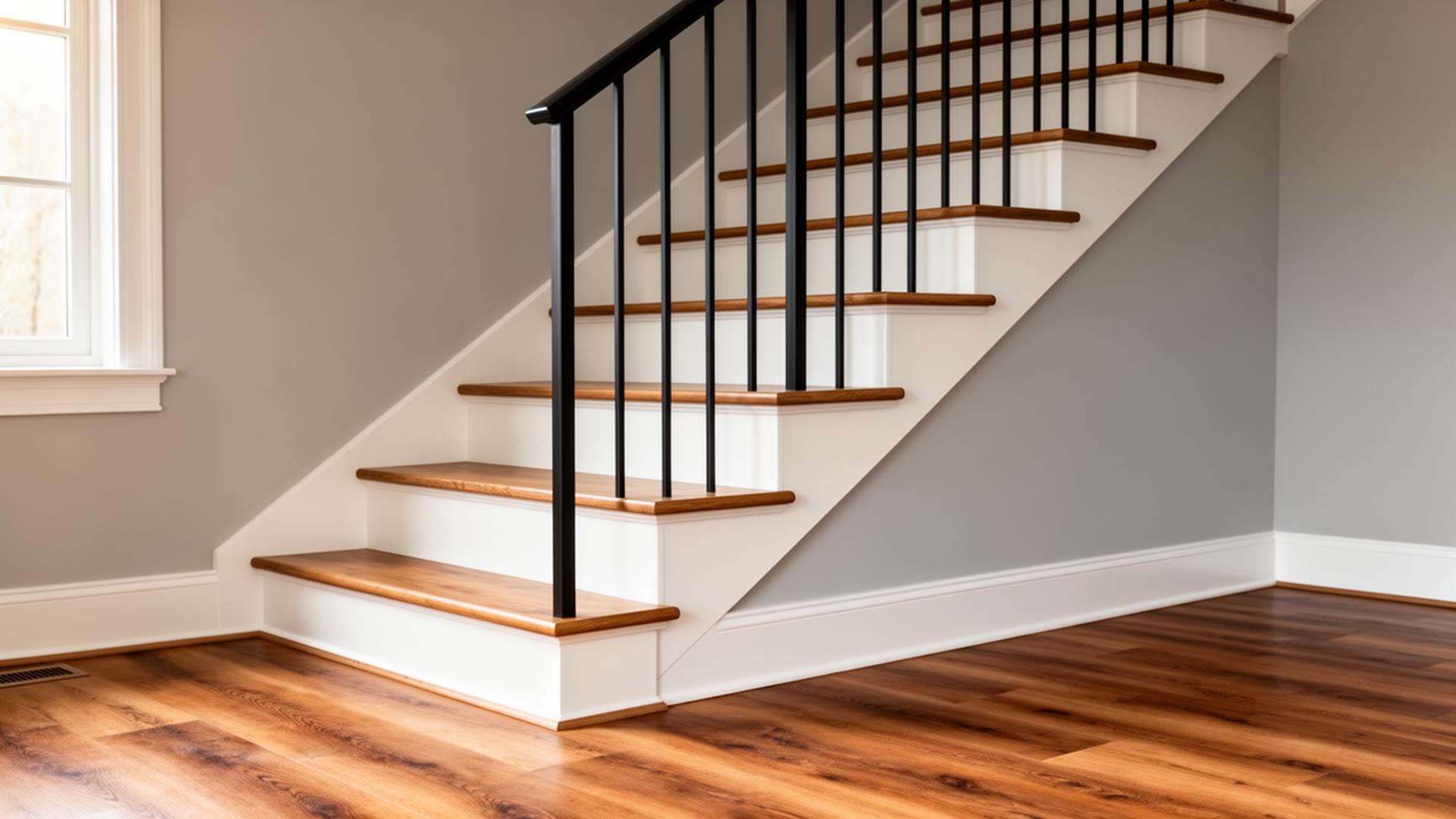
Yes — LVP can be installed on stairs, but it's a different job than a flat floor. The planks must be glued or mechanically fastened (click-lock alone isn't safe on stairs), every step needs a matching stair-nose molding, and the per-step labor is several times what you'd pay per square foot in a hallway. Done right, LVP stairs are durable, waterproof, and visually seamless with the floors below. Done wrong, the nosing lifts within a year and becomes a trip hazard.
Why homeowners want LVP on stairs
In open-concept homes, the staircase is visible from the living room — so when you replace your carpet or hardwood floors with LVP, the stairs become the odd man out. Matching the stairs to the floor gives a clean, continuous look that buyers and designers love. LVP is also waterproof, scratch-resistant, and far easier to clean than carpet — exactly what you want on the most-trafficked path in the house. Most major LVP brands now sell matching stair-nose accessories (the rounded front edge of each step) in the same color, texture, and thickness as the planks, so the finished look is genuinely seamless.
The two ways to install LVP on stairs
Glue-down LVP on stairs (the pro standard)
Each tread piece is fully bonded to the sub-tread with a pressure-sensitive or urethane adhesive. The stair nose is glued and often pin-nailed at the front edge. This is the method professional installers use because it has no hollow spots, the nosing won't lift, and it handles the constant flex of foot traffic. It does require a clean, sound, squeak-free sub-tread and a proper cure time before the stairs are used. We cover the broader trade-offs in click-lock vs glue-down LVP.
Click-lock LVP on stairs (generally not recommended)
Click-lock floating floors are designed to expand and contract as one big sheet across a horizontal surface. Stairs don't work that way — each tread is short, the nosing wraps over a vertical edge, and there's nowhere for the expansion gap to hide. Some manufacturers sell "stair tread kits" of pre-cut click-lock pieces, but those still need to be glued down to perform. If a contractor proposes installing click-lock LVP loose on stairs, walk away. The clicks will fail under traffic and the planks will slide.
Critical components you can't skip
- Stair nose molding — the rounded front edge that transitions tread to riser. Must be from the same product line as the floor for color, thickness, and finish to match. Budget $40–$90 per step. Skip this and you have a raw cut plank edge that chips, looks unfinished, and is a literal trip hazard.
- Riser treatment — you can paint risers white (most common, lowest cost) or cover them in LVP for a fully clad "wood stairs" look. Painted risers cost less in material and labor; LVP risers add roughly $20–$40 per step but give a high-end finished appearance.
- Sub-tread prep — every tread must be solid, level, and free of squeaks before LVP goes down. Any flex translates directly into nosing failure over time. See why subfloor prep matters for LVP — the same rules apply on a stair.
- The right adhesive — pressure-sensitive for typical residential stairs; urethane for high-traffic or commercial. The wrong glue will lift the nosing in 6–12 months no matter how clean the cut.
Common problems and how to avoid them
- Nosing edge lifting. Caused by the wrong adhesive, a flexing sub-tread, or skipping primer on OSB. Fix: full prep, correct glue, no rushing the cure.
- Planks sliding on treads. Happens when click-lock is used without glue. Fix: glue-down only on stair surfaces.
- Color mismatch between floor and stair nose. Stair-nose accessories are batched separately from planks; dye lots drift. Fix: order stair nose at the same time as the floor, ideally same lot.
- Uneven overhang. Stair nose must be cut to the exact tread width with a clean miter at the ends. Fix: only let installers with real stair experience touch this — it's a safety detail, not cosmetic.
For a wider list of what goes wrong with vinyl plank floors, see 10 common LVP installation mistakes.
What LVP on stairs typically costs
Stairs are priced per step, not per square foot, because the labor is concentrated in cutting, fitting, and adhering small pieces with very little forgiveness. A typical residential breakdown:
- Stair-nose molding: $40–$90 per step
- LVP tread material (≈1 sq ft per step): $3–$8 per step at typical plank prices
- Adhesive, prep, fasteners: $5–$10 per step
- Labor: $75–$150 per step depending on riser treatment, sub-tread condition, and stair geometry (winder/pie-shaped stairs cost more than straight runs)
A standard 12-step straight flight commonly lands between $1,200 and $2,500 all-in. Carpet removal and disposal usually add another $100–$250. For the live labor rates we charge on stairs and the rest of the home, see our pricing.
When LVP on stairs isn't the right choice
- The sub-tread is particle board, water-damaged, or springy — replace before considering LVP.
- Your LVP brand doesn't make a matching stair nose — a contrasting nose looks unfinished; pick a different line.
- Very high-traffic commercial stairs — purpose-built rubber treads or engineered hardwood will outlast LVP.
- Historic or non-standard staircases with irregular tread depths — every step becomes custom; the math often favors refinishing the existing wood instead.
DIY vs hiring a pro for stairs
Flat LVP is marketed as a beginner DIY project, and for a hallway it's reasonable. Stairs are not a beginner project. The nosing glue line is unforgiving, the cuts are compound angles, dye lots have to be matched across boxes, and a failed install isn't just ugly — it's a fall hazard. If you're already having TRU measure your floors, adding the staircase is a natural scope extension. We match dye lots, use the correct adhesive for residential traffic, and warranty the adhesion. After install, the maintenance is the same as any other LVP — see how to maintain LVP after installation.
The short version
LVP belongs on stairs only if you glue it down, use a matching stair nose on every step, and the sub-tread is solid. Click-lock alone is not safe. Expect $1,200–$2,500 for a typical 12-step flight done correctly. If the budget is tight, paint the risers and keep LVP on the treads — you'll get 90% of the look at a fraction of the cost. See our pricing or book a measurement to get an exact quote for your staircase.
Know your flooring cost in 60 seconds.
Use our published rates to get an itemized estimate — no phone calls, no sales pressure.
Keep reading
All articles →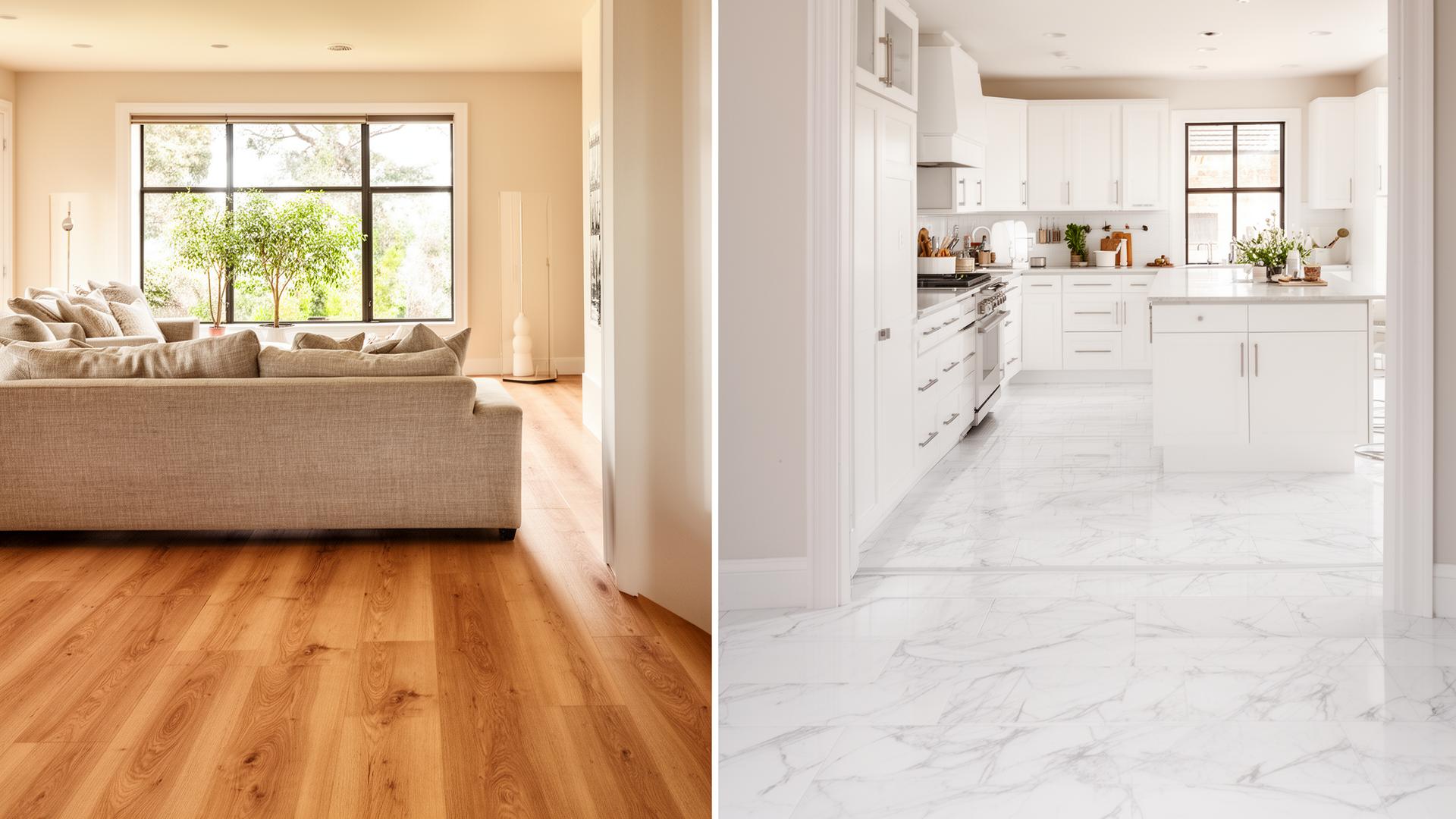
How Do I Choose Between Wood-Look and Stone-Look LVP?
A homeowner's decision guide for picking wood-look vs stone-look LVP — which visual works best in each room, what affects resale, and how to mix the two cleanly.
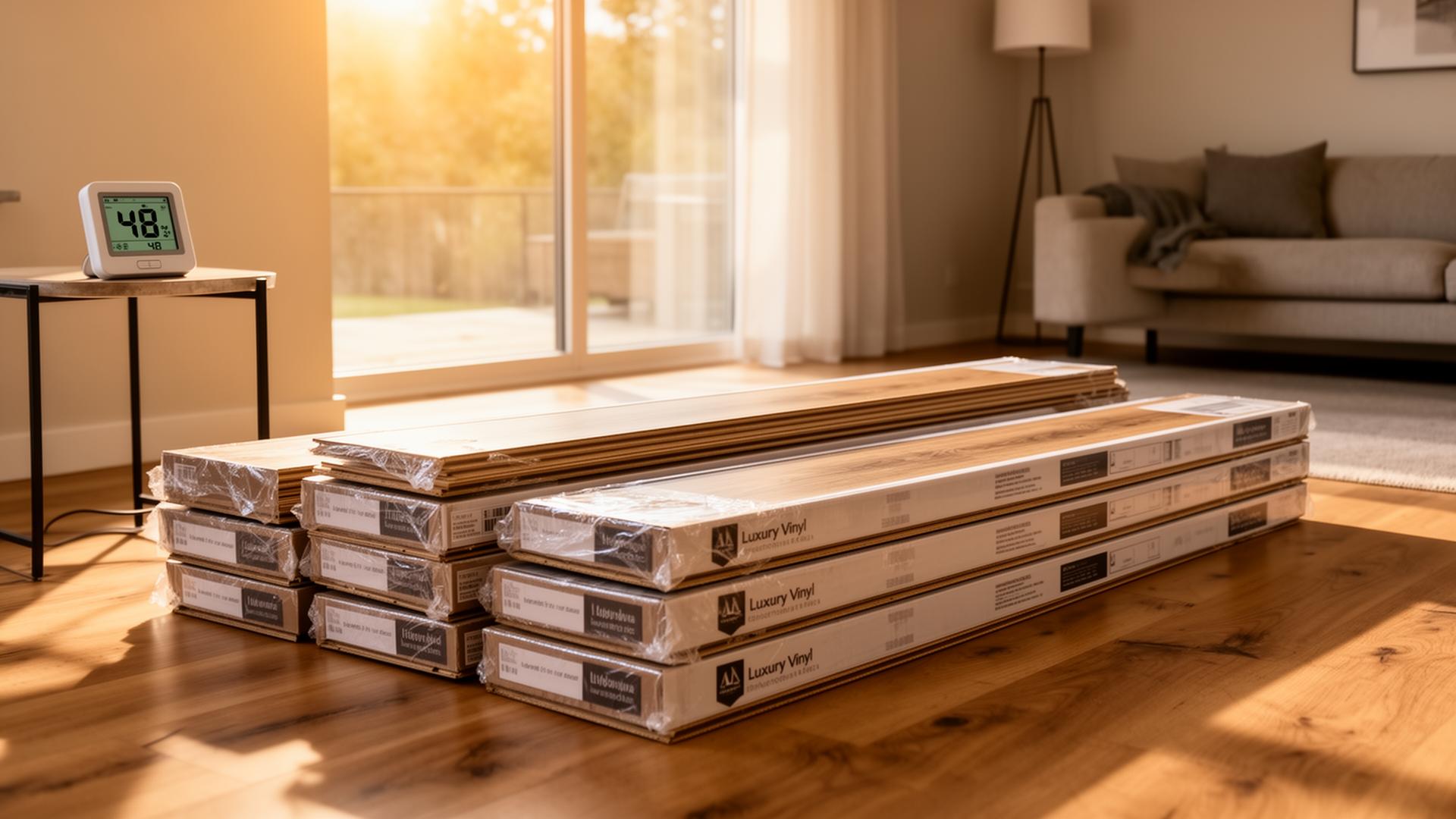
Should I Acclimate LVP Before Installation?
Yes — but not for the reasons you think. Here's what manufacturers actually require, how long acclimation takes, and what really happens if you skip it.
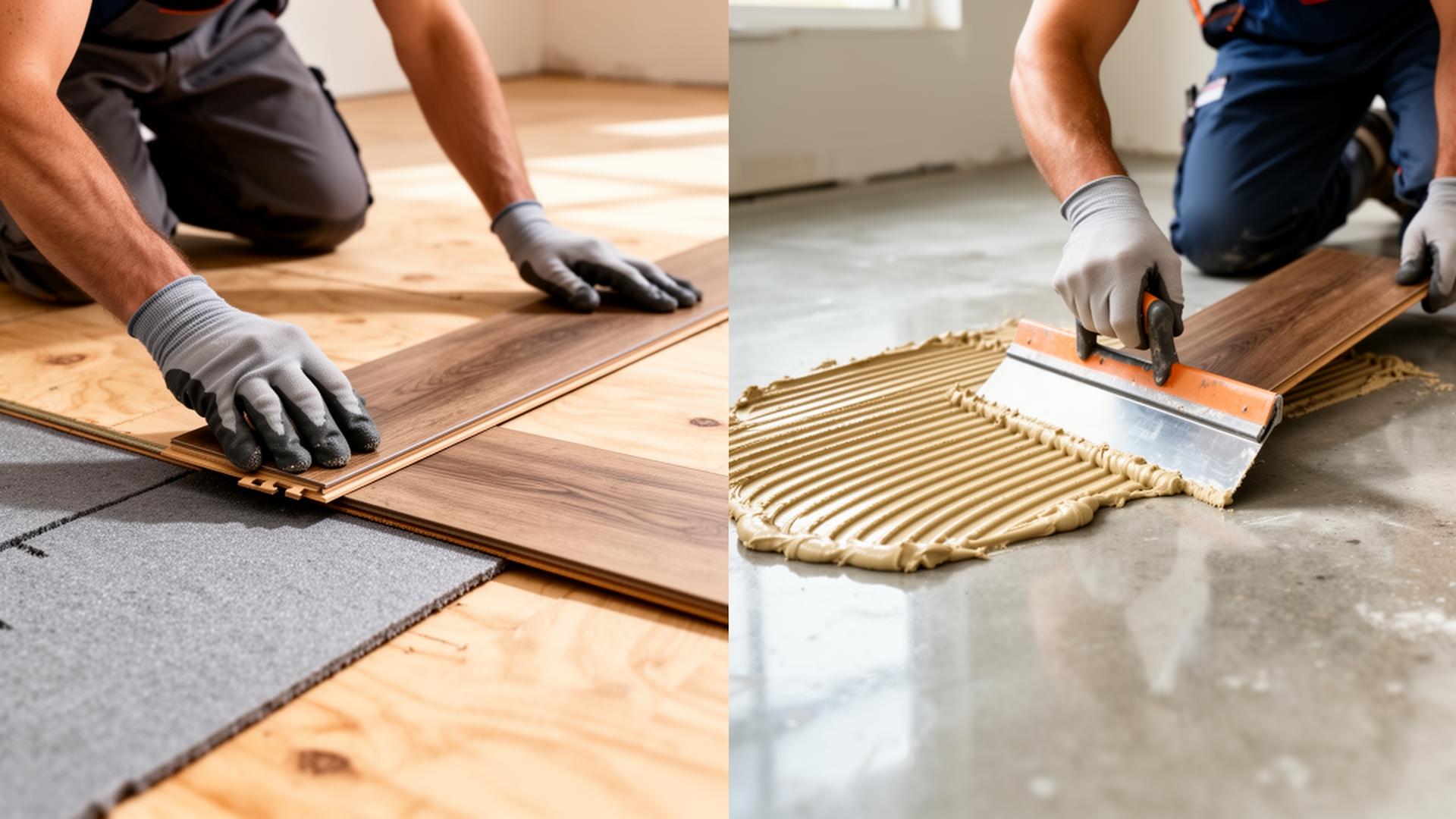
What's the Difference Between Click-Lock and Glue-Down LVP?
Click-lock floats. Glue-down bonds. Here's the honest comparison — cost, subfloor, moisture, repairs, lifespan — and which method actually fits your home.