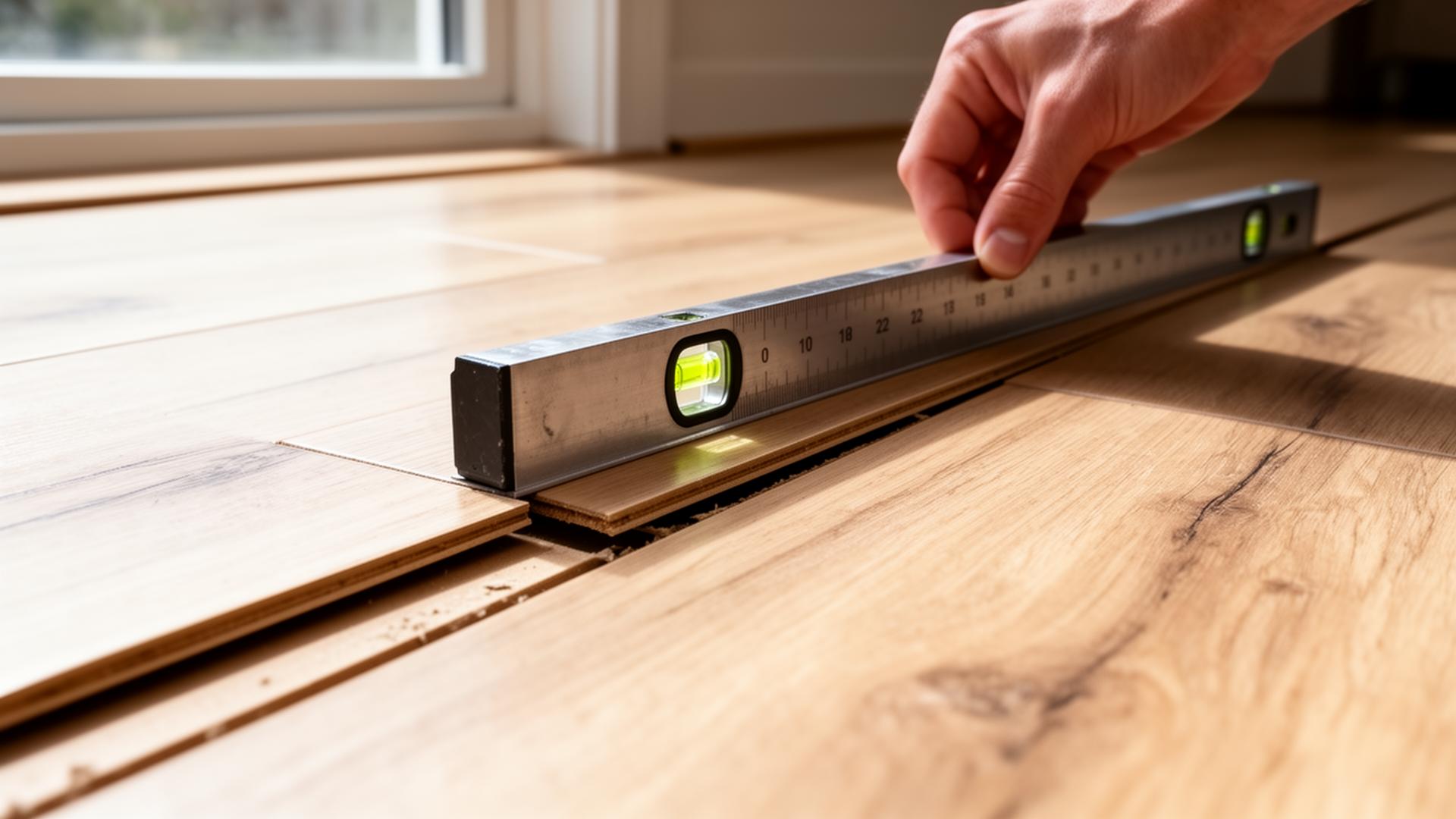
How to Get Flooring Installation Done Quickly (Without Cutting Corners)
A pro's playbook for speeding up your flooring install — what to decide before measure day, what to ask your installer, and where rushing actually costs you more.
Most residential flooring jobs take just 1–4 days of actual install time once materials are on site. The full timeline from "I want new floors" to "they''re done" is usually 2–4 weeks — and roughly 80% of that time is decisions, ordering, and acclimation, not labor. The fastest way to speed it up is to front-load decisions, not pressure the crew on install day.
The real flooring timeline (what eats the calendar)
Here''s where the weeks actually go on a typical residential project:
- Week 1 — Measurement, selection, quote. Book a measurement visit, walk the rooms with the installer, pick a product line, get an itemized quote, approve it.
- Week 2 — Material order and delivery. In-stock LVP and laminate usually arrive in 3–10 days. Special-order or wide-plank hardwood can take 3–6 weeks.
- Week 3 — Acclimation. 48–72 hours for most LVP, 5–7 days for solid hardwood. This is non-negotiable for warranty (why acclimation matters).
- Week 4 — Install. Roughly 1–3 days per 1,000 sf for LVP and laminate, 3–5 days for nail-down hardwood. Add cure time on glue-down jobs before furniture goes back.
If you''ve ever wondered why the install itself feels short compared to the total wait, that''s why. The crew isn''t slow — the calendar is.
What you can do before booking to cut a week off
The single biggest accelerator is showing up to your measurement visit ready to make decisions. Walk into that appointment with answers to these:
- Rough square footage. Tape-measure your rooms (length × width) and add 10%. You don''t need to be exact — you need to be in the ballpark so the installer can sanity-check materials and crew size on the spot.
- Flooring type and a short product list. Decide LVP vs laminate vs engineered hardwood before the visit, and bring 2–3 product names you''d be happy with. If you''re still browsing on install day, you''ve already lost a week.
- Subfloor type. Concrete slab? Plywood? OSB over joists? Knowing this lets the installer quote prep correctly the first time (why subfloor prep matters).
- Furniture plan. Empty the rooms before install day, or budget the furniture-move add-on into the quote upfront. Surprises at 8 a.m. cost half a day.
- Baseboards. Remove-and-reinstall or shoe molding? Decide now so the quote is final and there''s no mid-job change order.
- Pet and kid logistics. Plan where they''ll be for 1–3 days. Dust, blades, and open doors don''t mix.
What you can do at quote and measure to keep the schedule tight
Once the installer has been to your house, the next 72 hours are where most homeowners lose a week without realizing it:
- Book your measurement promptly. TRU lets you pick an open slot online and pay the measurement fee in the same step — book the earliest visit that fits your zone instead of waiting on phone tag.
- Approve the quote within 48 hours. Material ordering can''t start until you sign off. Hesitation here is the #1 cause of delay on otherwise simple jobs.
- Pick in-stock product when speed beats specificity. Most reputable LVP lines have multiple in-stock wood-looks within the same color family. If you absolutely must have one special-order SKU, that''s your call — but know it''s costing you 2–4 weeks.
- Pay the deposit promptly. Most reputable installers don''t lock crew dates on your calendar until the deposit clears.
What the installer can do to compress install days
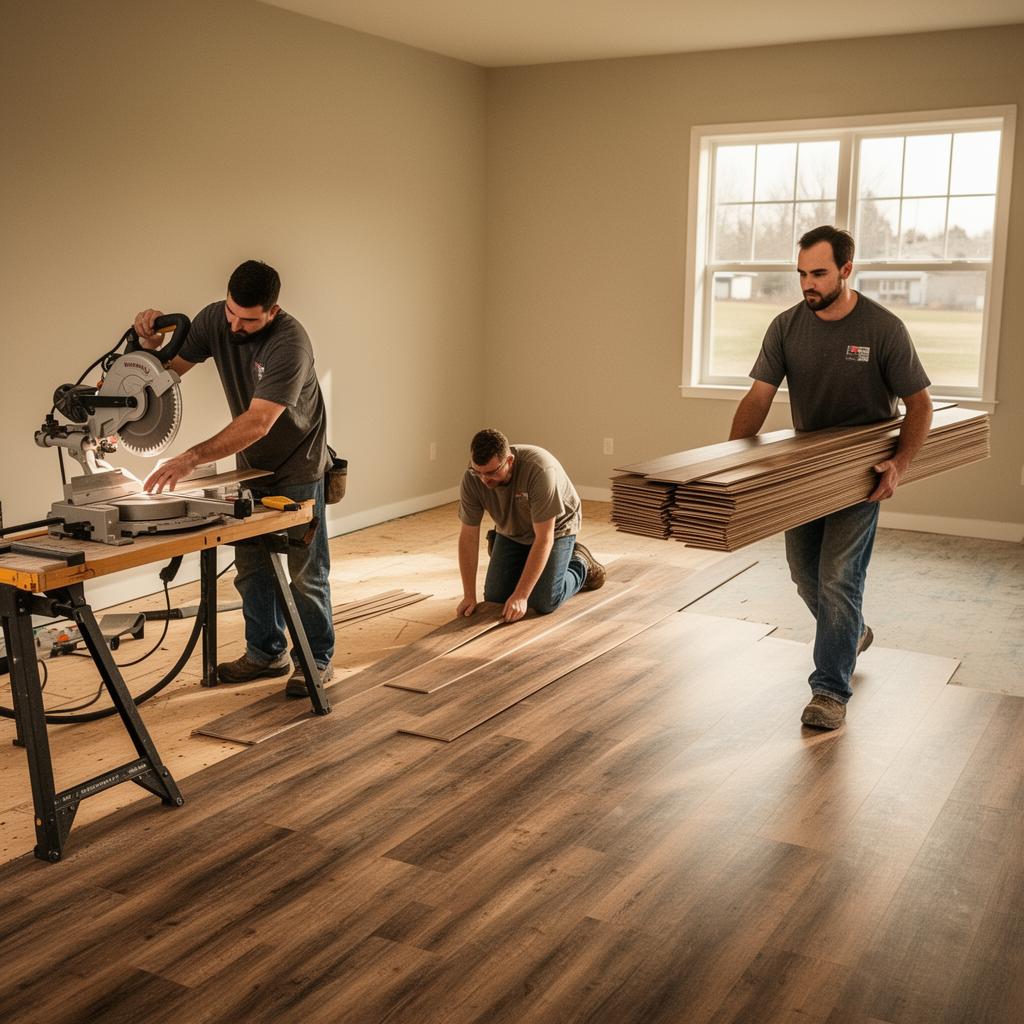
Once the materials are on site, the install crew has real levers to pull. Ask about these directly when you''re comparing quotes:
- Crew size. A 2-person crew on 1,000 sf of click-lock LVP is about 1.5 days. A 4-person crew is about 1. Scaling up costs a little more in labor but can save a full day of dust and disruption in your home.
- Material staging. A good crew drops and stages materials in the install room the day before, so day one starts with cutting, not carrying.
- Parallel tasks. Baseboard removal, subfloor prep, and material acclimation can often run in parallel rather than sequentially. Ask your installer how they sequence the work.
- Right install method for the timeline. Click-lock LVP doesn''t need glue cure time — you can walk on it immediately. Glue-down needs 12–24 hours before heavy furniture. If speed matters and the room allows it, click-lock wins (click-lock vs glue-down).
- A project manager who doesn''t need you on site. If the installer can make small judgment calls without texting you a photo and waiting for a reply, the day moves faster.
Where "fast" actually costs more — don''t cut these
Some shortcuts save a day now and cost you a week of rework later. These are the ones we see homeowners regret most:
- Skipping acclimation. Planks installed before they''ve adjusted to your home''s temperature and humidity will expand or contract afterward, leaving gaps or buckling at seams. The repair takes longer than the wait would have.
- Skipping subfloor prep. Installing over a wavy or damaged subfloor guarantees squeaks, lipping, and callbacks within months. Patching it properly costs hours; tearing up a finished floor to fix it later costs days.
- Hiring whoever can start tomorrow. Good installers are usually booked 1–3 weeks out. The crew that can start in the morning may be the one with no other work — for a reason (red flags when hiring a flooring contractor).
- Installing over a damaged subfloor "for now." There''s no for-now in flooring. Whatever''s under the planks today is what you live with until you tear it all up again.
- Pressuring the crew to skip seams, transitions, or stair-nose details. These are the visible quality details that don''t come back later. A rushed stair-nose announces itself every time someone walks down the stairs.
A realistic 2-week rush timeline TRU can deliver
When you make decisions promptly and the product is in stock, here''s how a fast residential LVP job actually runs:
- Day 1: Book your measurement visit online and pay the measurement fee.
- Day 2–5: Measurement visit (subject to zone availability). Itemized quote delivered same day. You approve same day.
- Day 6–10: Material ordered and delivered to the job site (in-stock LVP or laminate).
- Day 11–13: Materials acclimate in the install room.
- Day 14–15: Install. A typical 800–1,200 sf click-lock LVP job finishes in 1–2 days with a properly sized crew.
That''s about two weeks from "I need new floors" to "they''re done" — without skipping any step that protects the warranty or the finished look. See our transparent installation rates or book a measurement visit to start the clock.
Related reading: How long does LVP installation take? · How to prepare your home for flooring installation · Per-square-foot vs project pricing
Know your flooring cost in 60 seconds.
Use our published rates to get an itemized estimate — no phone calls, no sales pressure.